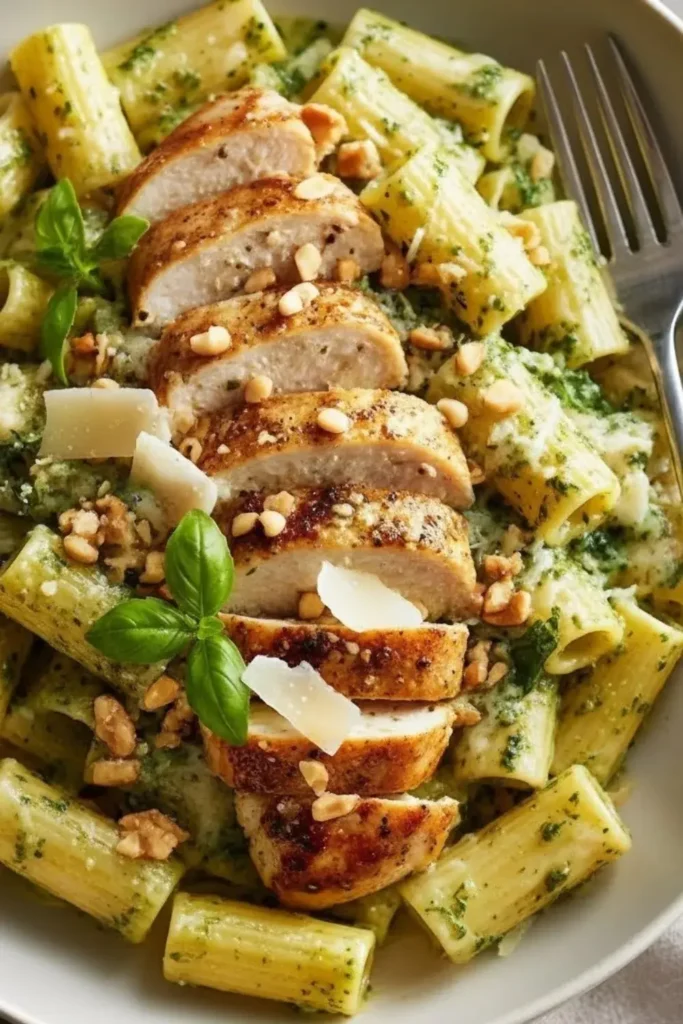
Some nights, you just want dinner to work—and that’s where Pesto Chicken Pasta saves the day. It’s fast, cozy, and full of bold flavor, the kind of meal you throw together after a long day and still feel proud serving. I’ve made this both ways more times than I can count, with classic pesto or a creamy twist, using the same real-life kitchen shortcuts we all rely on. Stick with me, and I’ll show you how this one simple dish can fit your week perfectly.
Why You’ll Love This Pesto Chicken Pasta
This is one of those dinners that feels like a win every time. I’ve made it on busy nights when I had zero energy, and it still came out comforting and full of flavor. It’s fast, flexible, and forgiving, whether you grab pesto from the store or make your own. Best part? You can keep it light or make it creamy, depending on your mood.
What Kind of Main Ingredients Should I Use?
When it comes to pasta, shapes like penne, rotini, or fettuccine work best because they grab onto the sauce instead of letting it slide away. I usually reach for chicken breast since it cooks fast and stays lean, but thighs are great if you want extra juiciness. Store-bought pesto is a lifesaver on weeknights, while homemade feels special when you have time. Fresh herbs add brightness, dried herbs add ease, and olive oil, butter, or cream let you choose how rich the dish feels.
Options for Substitutions
This recipe is very flexible, which is why I love it so much. I’ve swapped chicken for shrimp or salmon when that’s what I had, and even tofu works if cooked well. You can lighten things up with milk or go dairy-free with plant-based cream. Different cheeses, nuts, or pasta types all work, so you can make it fit your fridge, your diet, and your taste without stress.
Ingredients for Pesto Chicken Pasta
Pasta (type & why it works)
Short pasta like penne or rotini holds pesto well, while fettuccine gives a silky bite. I use what’s in the pantry, but anything that grabs sauce works great.
Chicken breast (cut size importance)
Chicken breast cooks fast and stays lean. Cut it into even, bite-sized pieces so everything cooks at the same time without drying out.
Basil pesto (store-bought or homemade)
Store-bought pesto is perfect for busy nights and still tastes great. Homemade pesto shines when you want fresher flavor and more control.
Olive oil (for sautéing)
A good olive oil helps the chicken brown and adds a light, clean flavor. You don’t need much—just enough to coat the pan.
Garlic (fresh recommended)
Fresh garlic gives the best aroma and depth. I like to mince it fine so it melts into the sauce instead of standing out.
Parmesan cheese (flavor depth)
Parmesan adds salt and nutty richness. Freshly grated melts better and tastes smoother than pre-shredded.
Heavy cream (optional – for creamy version)
Cream turns pesto into a soft, cozy sauce. A small splash is enough to keep it rich without feeling heavy.
Butter (optional richness booster)
Butter adds shine and rounds out sharp flavors. I use it at the end when I want extra comfort.
Cherry tomatoes (optional freshness)
Cherry tomatoes bring sweetness and color. They balance the richness and keep the dish feeling fresh.
Sun-dried tomatoes (optional depth)
These add a deeper, slightly tangy flavor. Chop them small so they blend in instead of overpowering the dish.
Olives (optional salty balance)
Olives add a salty pop that works well with pesto. A little goes a long way.
Salt & black pepper
Season in layers as you cook. Always taste before adding more, since pesto and cheese already have salt.
Lemon zest (optional brightness)
A pinch of lemon zest at the end wakes everything up. It’s subtle but makes the flavors feel lighter and cleaner.
How to Make Pesto Chicken Pasta
Step 1: Cook the Pasta
Start by boiling your pasta in well-salted water. Cook it until just al dente, so it still has a little bite. Before draining, save a small cup of pasta water—it’s liquid gold for the sauce later.
Step 2: Season and Cook the Chicken
Cut the chicken into even, bite-sized pieces so they cook fast and stay juicy. Season simply with salt and pepper, then sauté in olive oil until golden and cooked through. This is where the flavor starts, so don’t rush it.
Step 3: Build the Pesto Sauce
Lower the heat and add garlic to the pan, letting it soften without browning. Stir in the pesto, then add a splash of cream or a bit of butter if you want it richer. Keep the heat gentle so the pesto stays fresh and bright.
Step 4: Combine Everything
Add the cooked pasta and chicken back to the pan. Pour in a little reserved pasta water and toss until everything is coated and glossy. The sauce should cling, not pool.
Step 5: Finish and Garnish
Turn off the heat and stir in parmesan for depth. Finish with lemon zest and fresh basil to wake everything up. Serve right away while it’s warm and comforting.
How Long to Cook Pesto Chicken Pasta
This is one of those meals that moves fast once you start. The pasta usually takes about 8–10 minutes to cook until al dente. The chicken cooks in 6–8 minutes, depending on size. The sauce only needs 2–3 minutes on low heat, so the total time stays right around 25 minutes from start to finish.
Tips for Perfect Pesto Chicken Pasta
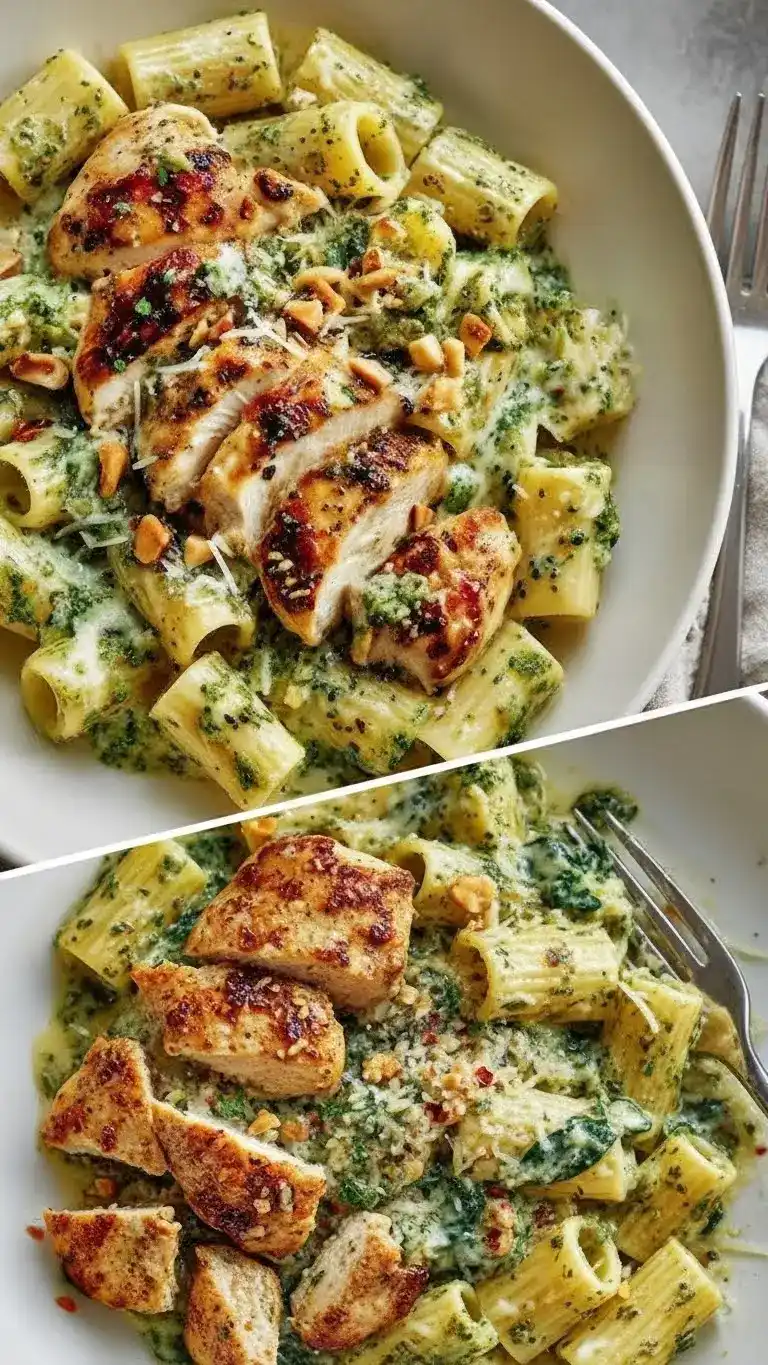
I’ve learned that juicy chicken comes from pulling it off the heat just as it’s done. Always add pesto on low heat so it stays bright and fresh. A splash of pasta water helps the sauce cling better. Taste first before adding salt, then finish with lemon to balance everything out.
Watch Out for These Mistakes While Cooking
Pesto hates high heat, so keep things gentle once it goes in. Overcooked pasta turns this dish heavy instead of smooth. Too much cream can hide the pesto flavor. Season the chicken early, and wait until the end to add cheese so it melts instead of clumping.
What to Serve With Pesto Chicken Pasta
Garlic Bread
Crispy garlic bread is perfect for soaking up extra pesto sauce. It turns a simple pasta night into a full comfort meal.
Caesar Salad
A fresh Caesar salad adds crunch and balance. The crisp greens cut through the richness of the pesto.
Roasted Vegetables
Roasted veggies like zucchini or carrots add warmth and depth. They make the meal feel hearty but still fresh.
Simple Green Salad
A light green salad keeps things clean and easy. It’s great when the pasta is rich or creamy.
Bruschetta
Bruschetta adds a bright, tomato-forward bite. It brings contrast and a pop of freshness to the plate.
Grilled Asparagus
Grilled asparagus adds a smoky, clean flavor. It pairs well with both creamy and non-creamy pesto pasta.
Tomato Mozzarella Salad
This classic combo keeps the meal light and balanced. The fresh flavors work beautifully with basil pesto.
Soup or Light Appetizer
A small soup or simple starter rounds out the meal. It’s perfect when serving this pasta for guests or family dinners.
Storage & Reheating Instructions
Store leftover Pesto Chicken Pasta in the fridge within two hours of cooking. Use an airtight glass or BPA-free container to keep flavors fresh for up to 3 days. For reheating, the stovetop works best—add a splash of water or milk and warm gently. The microwave is fine too; just cover it and stir halfway to refresh the sauce.
Estimated Nutrition
Per serving (approximate):
- Calories: 480–520 kcal
- Protein: 32–36 g
- Fat: 22–26 g
- Saturated Fat: 7–9 g
- Carbohydrates: 45–50 g
- Fiber: 3–5 g
- Sugar: 4–6 g
- Sodium: 650–750 mg
These values are estimates based on standard ingredients and average portion sizes. Actual nutrition will vary depending on the type of pasta, pesto, cheese, and whether cream or butter is used. For precise numbers, calculate using your specific brands and quantities.
FAQs for Pesto Chicken Pasta
Can I make Pesto Chicken Pasta ahead of time?
Yes, you can make Pesto Chicken Pasta ahead. Store it in the fridge for up to three days. Reheat gently with a splash of water to keep the sauce smooth.
Is pesto chicken pasta better creamy or non-creamy?
Both are great, and it depends on your mood. Creamy pesto chicken pasta feels rich and cozy. Non-creamy keeps the basil flavor bright and fresh.
Can I use jarred pesto for this recipe?
Absolutely. Jarred pesto works well and saves time on busy nights. Just choose one with simple ingredients for the best flavor.
What pasta works best with pesto sauce?
Pasta with grooves works best. Penne, rotini, and fettuccine hold pesto well and coat evenly with the sauce.
How do I keep pesto from turning bitter?
Keep the heat low when adding pesto. High heat can dull the flavor and cause bitterness. Always stir it in at the end.
Conclusion
Pesto Chicken Pasta is one of those recipes that grows with you. It works on busy nights when you need dinner fast, and it still feels special when you slow down and make it your own. You can keep it light, make it creamy, or swap ingredients to match what’s in your fridge.
If you’re new to cooking, this dish builds confidence. If you’ve been cooking for years, it still gives room to play and adjust. Try it once, then make it yours—and come back soon, because there’s always another good meal waiting to be shared together.
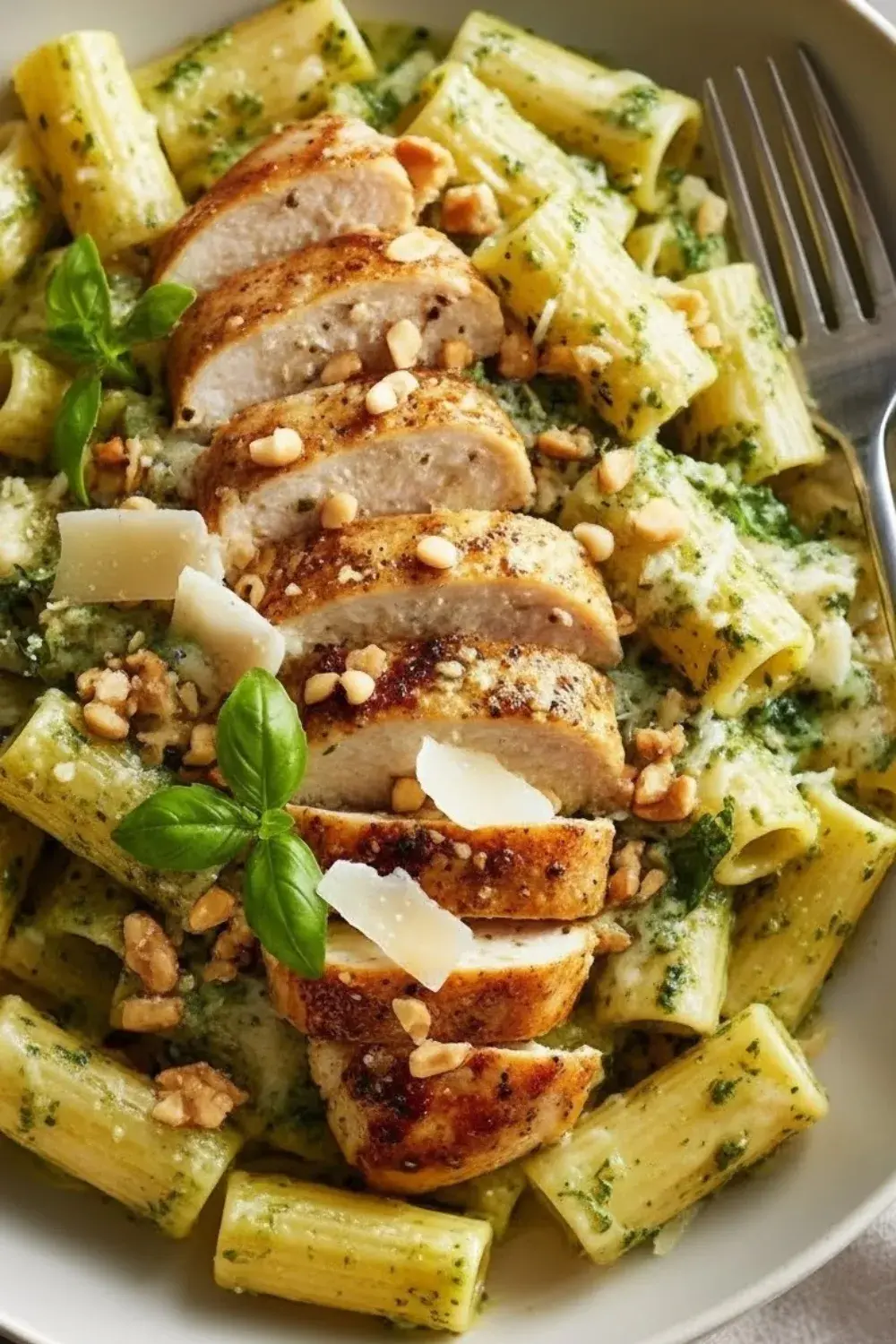

Pesto Chicken Pasta
Ingredients
Equipment
Method
- Bring a large pot of well-salted water to a boil and cook the pasta until al dente according to package instructions. Reserve ½ cup pasta water, then drain.
- Season the chicken pieces evenly with salt and black pepper.
- Heat olive oil in a large skillet over medium heat and cook the chicken for 6–8 minutes until golden and fully cooked. Remove from the pan and set aside.
- Reduce heat to low and add minced garlic to the same skillet. Cook for 30 seconds until fragrant.
- Stir in the pesto and add heavy cream or butter if using, keeping the heat low to preserve flavor.
- Return the cooked chicken and pasta to the skillet.
- Add reserved pasta water a little at a time and toss until the sauce coats everything evenly.
- Remove from heat and stir in Parmesan cheese.
- Finish with lemon zest, fresh basil, and optional tomatoes or olives.
- Serve immediately while warm.