
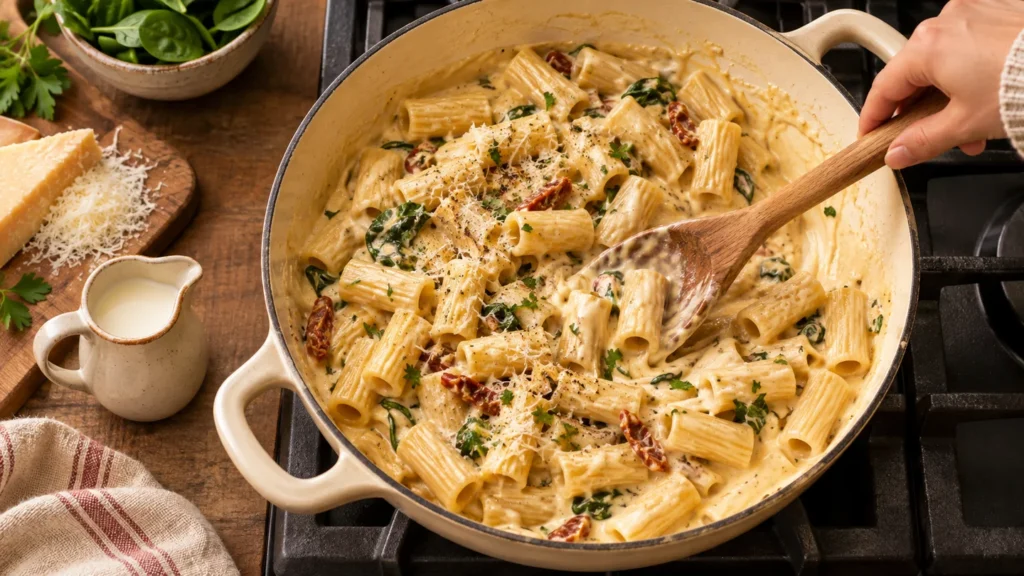
If you’re wondering how to reheat creamy pasta without drying it out, start with 1 tablespoon of liquid per cup of cold pasta. Warm it gently and stir as it loosens. A skillet gives you the most control over the sauce, while a covered microwave-safe bowl works well for one serving. For either method, check that the leftovers reach 165°F (74°C) throughout before serving.
Stovetop method · Microwave method · Sauce fixes · Storage and safety
Which reheating method should you use?
| Method | Best for | How to protect the sauce |
|---|---|---|
| Stovetop | One or two servings of Alfredo, Parmesan pasta, or creamy rigatoni | Warm over low to medium-low heat and stir gently. |
| Microwave | One serving at home or at work | Cover loosely, use half power if available, and stir between bursts. |
| Oven | Several portions of baked pasta or a thick slice of lasagna | Cover the baking dish to hold in moisture and check the center. |
The starting amount of liquid is deliberately small. Day-old pasta can absorb some of the sauce, and a cold cheese sauce feels thicker than it will once warmed. Add just enough liquid to help the pasta move. After stirring, look for sauce that clings to the noodles when you lift them. A puddle at the bottom means it needs time to mix or that you’ve already added enough.
How to reheat creamy pasta on the stovetop
Use a skillet wide enough to spread the pasta into a shallow layer. With a full dinner’s worth of leftovers, work in two batches or use a wider pan. A deep mound holds a cold center while the noodles touching the skillet soften and the sauce around the edges reduces.
- Start in a cool skillet. Add the pasta and about 1 tablespoon of milk, water, or low-sodium broth per cup. Pour the liquid around the pasta so it can run underneath. If the noodles are stuck in one block, leave them together until they soften enough to separate with a spatula.
- Warm over low to medium-low heat. Stir and fold the pasta gently, scraping the bottom of the skillet as you go. For long noodles, use tongs to lift and turn the strands. If the pan dries before the center is warm, add another teaspoon of liquid and stir again.
- Check a few spots for 165°F. Stir once more, then check the middle of the thickest part. If the pasta has chicken or another protein, check a thick piece as well. Keep heating and stirring as needed, then serve promptly once the food is hot throughout.
For creamy rigatoni, let the tubes soften before turning them so the ridges and edges stay intact. With chicken Alfredo pasta with broccoli, spread the chicken pieces through the pan instead of leaving them in a pile. A silicone spatula makes it easier to move sauce away from the hot edges, where it tends to thicken first.
How to reheat creamy pasta in the microwave
Transfer one serving to a shallow microwave-safe bowl. A wide bowl makes it easier to spread the pasta and stir the cooler center into the warmer edges. If you packed lunch in a storage container, check the manufacturer’s instructions for both the base and the lid before heating.
- Stir in a little liquid. Start with 1 tablespoon per cup. If the pasta is tightly packed from the fridge, drizzle the liquid over it, then spread the portion out as soon as it loosens.
- Cover with a vent. Use a microwave-safe cover or a microwave-safe plate set loosely on top. Leave a gap for steam to escape. Remove a tightly sealed storage lid before microwaving.
- Heat in short bursts. Try 30-second bursts at half power if your microwave has a power setting. Stir thoroughly between bursts, pulling food from the edge toward the center. Once the pasta is close to hot, shorten the bursts so the sauce has less time to bubble around the rim.
- Stir, rest briefly, and check the temperature. Let the heat distribute, then check several places with a food thermometer. Continue heating if any part is below 165°F. Microwave wattage, portion size, and the shape of the bowl all affect how long it takes.
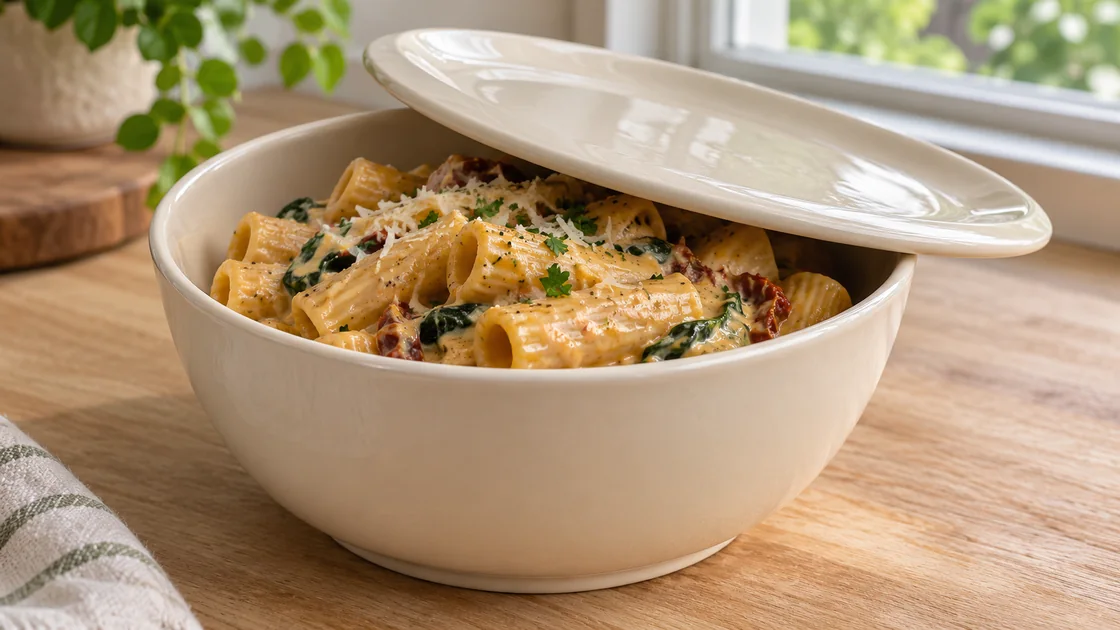
If only the rim is bubbling, stop and stir before adding time. A ladleful of sauce may be warm while pasta and chicken in the middle are still cold. For a packed lunch, bring a small container of milk or use a splash of water at work. The water helps loosen the sauce without requiring a second dairy ingredient in your lunch bag.
How to reheat baked creamy pasta in the oven
Choose the oven when several portions need to be ready together or when you want a casserole slice to hold its layers. Put the leftovers in an oven-safe dish and cover it with foil. Add a small splash of milk, broth, or water around the cut edges if they look dry. Heat at 350°F and check the center with a food thermometer. Larger portions and deep dishes take longer than a single slice, so use 165°F as the endpoint.
If you want to crisp a crumb topping, uncover the dish near the end and watch it closely. For pasta already baked in a glass dish, check the manufacturer’s directions before moving the cold dish to a hot oven. A shallow oven-safe dish makes it easier to warm a portion of white chicken lasagna evenly without disturbing the rest of the casserole.
What liquid should you add to creamy pasta?
Milk is a good starting point for Alfredo, garlic Parmesan sauce, and other dairy-based sauces. It loosens the coating while keeping a similar flavor. A teaspoon or two of cream can work for an especially thick sauce, although it adds richness quickly. If you used an unsweetened plain plant milk in the original sauce, using the same one keeps the flavor consistent. Check the label for vanilla or added sweeteners before pouring it in.
Water works when the sauce is already well seasoned. It helps loosen creamy tomato pasta without making it noticeably richer. With creamy roasted tomato pasta, try water before adding extra cream so the roasted tomato flavor stays clear. If the dish originally used a soft cheese topping and you stored some separately, you can add the cold topping after the pasta itself is safely hot.
Low-sodium broth works well with creamy chicken or mushroom pasta. Choose a mild broth and taste the warmed pasta before adding salt or extra Parmesan. The sauce may already be salty, especially where it thickened around the pan. For a small serving, a few teaspoons of broth can have a bigger effect on flavor than you’d expect.
How to fix dry, oily, or grainy sauce
The noodles look dry and stick together
Add a teaspoon of liquid at a time, then fold it through the pasta. Wait until the sauce is warm enough to move before deciding whether to add more. Dry fettuccine can be teased apart with tongs, while short shapes are easier to separate with the edge of a flexible spatula. If the sauce has already been fully absorbed, a spoonful of reserved sauce is usually the most direct way to restore the coating.
There is a layer of oil at the edge
Lower the heat or briefly move the pan off the burner. Add a teaspoon of warm water or milk and stir the liquid into the oily spots before folding the pasta back through. This may help the fat and liquid come together again. Keep the heat gentle as you bring the leftovers to temperature. If you’re seeing small oil droplets but the noodles are coated and the flavor is fine, the pasta can still be served once it’s safely reheated.
The sauce feels grainy
A cheese-heavy sauce can become grainy when reheated, especially where it sat against the hottest part of the pan. Gentle heat and a splash of milk can improve the texture, although the sauce may stay slightly grainy. Add fresh grated Parmesan or chopped parsley at the table if you want a brighter finish. Adding a handful of cold cheese to the pan early can make the sauce thicker before the leftovers are hot.
How to store and reheat creamy pasta safely
Follow USDA guidance for leftovers and refrigerate at 40°F (4°C) or below in shallow containers within two hours. If the surrounding temperature is above 90°F (32°C), that window is one hour. Use refrigerated leftovers within three to four days, or freeze them earlier. Reheat the portion you plan to eat to 165°F, as recommended by FoodSafety.gov.
Pack leftovers in meal-size portions so you can heat just what you’re eating. A shallow container helps the food cool evenly and makes it easier to spread out at lunchtime. Mark the container with the date you cooked the pasta. If you expect to have extra sauce, store it separately so you can stir it into the cold noodles during reheating. If the pasta has been left out past the recommended time, discard it.
As an Amazon Associate I earn from qualifying purchases. A quick-read food thermometer is useful when a serving contains thick pieces of chicken or several layers of pasta. A set of shallow meal-prep containers makes it easier to store lunch in single portions. Check the manufacturer’s microwave instructions before heating the base or lid.
Before serving, taste a noodle after the pasta reaches temperature. A squeeze of lemon can balance a rich mushroom sauce, and chopped basil works well with creamy tomato pasta.
Frequently asked questions
Can I reheat Alfredo pasta without milk?
Yes. Stir a tablespoon of water or low-sodium broth into each cup of pasta as a starting point. Use water if the sauce is already salty or you want to preserve the Parmesan flavor. Add more by the teaspoon only if the pasta still looks dry after it begins to warm.
Can I reheat frozen creamy pasta?
Yes. For more even heating, thaw it in the refrigerator and then use the skillet or oven method until it reaches 165°F. A thawed cream sauce may have some liquid around the edges. Stir that back through as you heat it before deciding how much extra liquid to add.
What if the pasta is hot but the chicken is still cold?
Spread the chicken pieces out and continue heating in short intervals. Turn the larger pieces and stir the pasta so the sauce stays evenly distributed. Check the center of the thickest piece and a few places in the pasta before serving.
What’s the easiest way to prep creamy pasta for tomorrow?
Portion it into shallow containers, label the date, and refrigerate promptly. Keep any spare sauce separate if you can. At lunch, loosen the noodles with a splash of that sauce or a little water, then heat in a covered bowl and stir between bursts.



One Comment