These slow cooker soup recipes help you plan dinner and a few lunches around one cooking session. Choose white chicken chili for beans and shredded chicken, Zuppa Toscana for creamy sausage and potatoes, or beef stew for a thicker, spoonable meal. The comparison below helps you match a recipe to your schedule, then prep, portion, and reheat it with less last-minute work.
Compare the 3 recipes · Meal prep schedule · Storage and reheating
Which slow cooker soup should you make?
| Recipe | Choose it for | Finish near serving |
|---|---|---|
| White chicken chili | A bean-filled bowl with shredded chicken | Shred cooked chicken and add optional lime or cheese. |
| Zuppa Toscana | Creamy sausage, potato, and kale soup | Stir in the cream and greens as the recipe directs. |
| Beef stew | A thicker dinner with chunky vegetables | Remove the bay leaf and finish with optional peas or parsley. |
Each linked recipe contains the ingredient amounts and cooking steps. Choose one batch that fits your cooker and your plans for the next few days. If you are cooking for two, decide which portions will become lunch and which will go into the freezer. If you are feeding a family, set out your storage containers before serving so you can put leftovers away promptly afterward.
1. White chicken chili with beans
This chicken chili brings together shredded chicken, white beans, green chiles, and corn in a gently spiced broth. It suits evenings when you want toppings at the table so everyone can finish their own bowl. Keep lime wedges, chopped herbs, sliced jalapeños, and cheese separate. Add a small dish of tortilla chips just before serving if you want crunch alongside the soft beans and chicken.
What to prep ahead. Measure the spices, drain and rinse the canned beans, and chop the onion. Refrigerate prepared vegetables and keep raw chicken in a separate sealed container on the lowest refrigerator shelf. Set a reminder for the finishing steps so the chicken is ready to shred when you want to eat. For this recipe, use fully thawed chicken and check that the thickest part reaches 165°F before shredding. Read the slow cooker manual for its loading guidance.
How to make the leftovers work. Stir the pot before ladling portions so every container gets chicken, beans, and broth. Divide long strands of chicken into pieces that are easy to eat with a spoon. Pack cheese, lime, and crisp toppings separately. If the chilled chili thickens, add a small splash of broth or water while reheating and stir it through before deciding whether to add more.
Get the white chicken chili recipe
2. Crockpot Zuppa Toscana
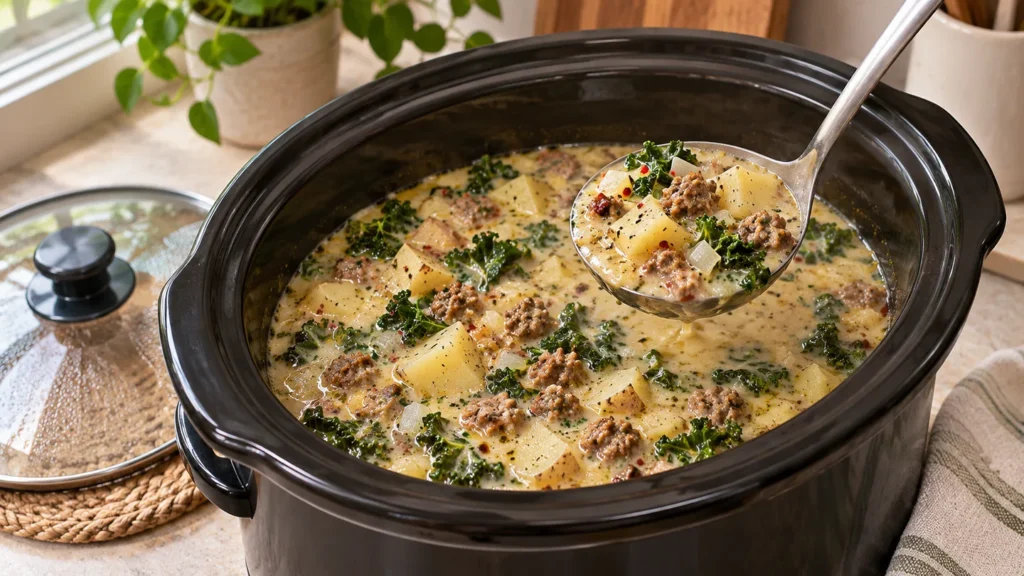
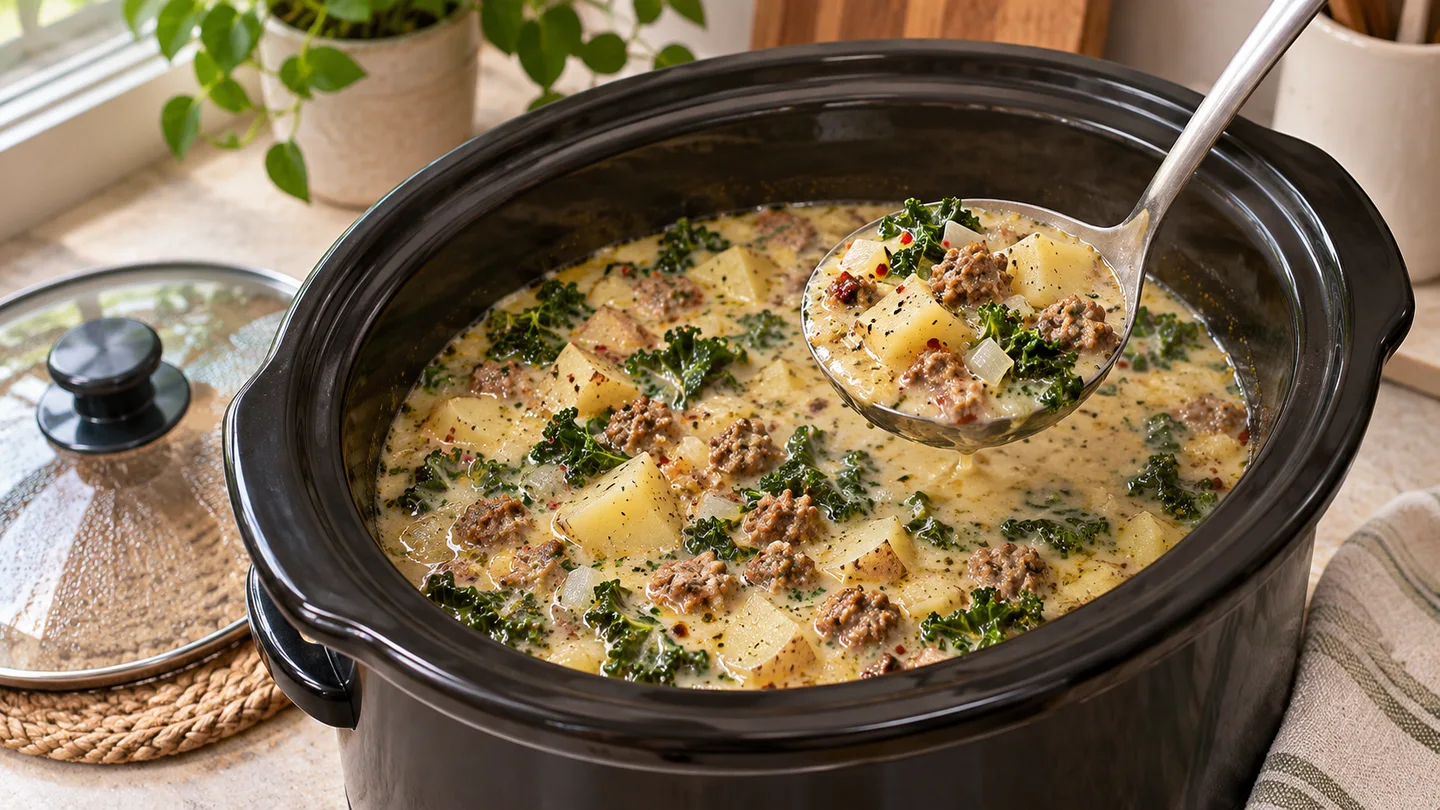
Zuppa Toscana is a good choice when you want a creamy bowl with sausage, potatoes, and greens. The sausage adds a savory base, while the kale gives the soup some texture. This recipe begins with browning the sausage, so allow time for the skillet step before filling the cooker. It works especially well for a day when you can return to the kitchen near dinner to add the finishing ingredients.
What to prep ahead. Wash the kale, remove tough stems, and store it separately from the potatoes and onion. Gather the sausage, broth, cream, and Parmesan so you can see which ingredients go in at the beginning and which are added later. Slice the potatoes to a similar thickness for even cooking. Follow the recipe’s instructions for the cream and greens, and give those additions time to heat through before serving.
How to make the leftovers work. Stir gently when portioning so the cooked potatoes keep their shape. Creamy broth and potatoes can change texture after freezing, so refrigerate the servings you expect to eat soon and freeze a smaller trial portion if texture matters to you. Reheat gently on the stove, stirring often while bringing the whole serving to a safe temperature. Add fresh Parmesan at the table.
3. Crock Pot beef stew
Beef stew gives you a thicker option with chunks of beef, carrots, and potatoes. Choose it when you want a dinner that can stand on its own with bread or a simple green side. The recipe uses beef chuck and a flour coating to build its body. If you prefer browning the beef, leave time for that step and scrape the flavorful pan juices into the cooker as directed.
What to prep ahead. Measure the herbs and flour, wash the vegetables, and set out the correct amount of broth. Keep the meat refrigerated until you are ready to cook. Cut vegetables to similar sizes so small pieces do not disappear before the larger ones become tender. If preparing meat and vegetables in advance, store them separately and keep them chilled. Follow the full recipe for the quantity of liquid and the cooking setting.
How to make the leftovers work. Distribute the beef and vegetables among the containers before dividing the gravy. This keeps the last serving from ending up with mostly liquid. Remove the bay leaf before packing. When reheating, stir carefully around the potatoes and check the center of the thickest chunks. A little water or broth can loosen gravy that has thickened overnight.
Get the Crock Pot beef stew recipe
A practical soup meal prep schedule
The evening before. Pick one recipe, check that your slow cooker has enough capacity, and make space in the refrigerator for the finished portions. Chop permitted ingredients, measure seasonings, and keep everything perishable chilled. Store raw meat separately from vegetables and toppings. If meat is frozen, allow enough time for it to thaw safely in the refrigerator before the cooking day. Put the recipe where you can easily check it in the morning.
When cooking starts. Follow the recipe’s order for browning, loading, and adding liquid. Connect the cooker and choose the cooking setting specified in the recipe. Keep the lid in place during cooking, apart from the checks and additions the method needs. A delayed start with raw perishable ingredients sitting in an unheated cooker is unsuitable. Match the batch to the appliance instructions so the food has space to cook properly.
Before serving. Complete any shredding or final additions, then check doneness. Chicken should reach 165°F in its thickest part. Taste the soup after stirring so the seasoning reflects the whole batch. Add optional fresh toppings at the table. A bowl of chili with lime and a little chopped cilantro can feel different from tomorrow’s lunch with a small helping of shredded cheese.
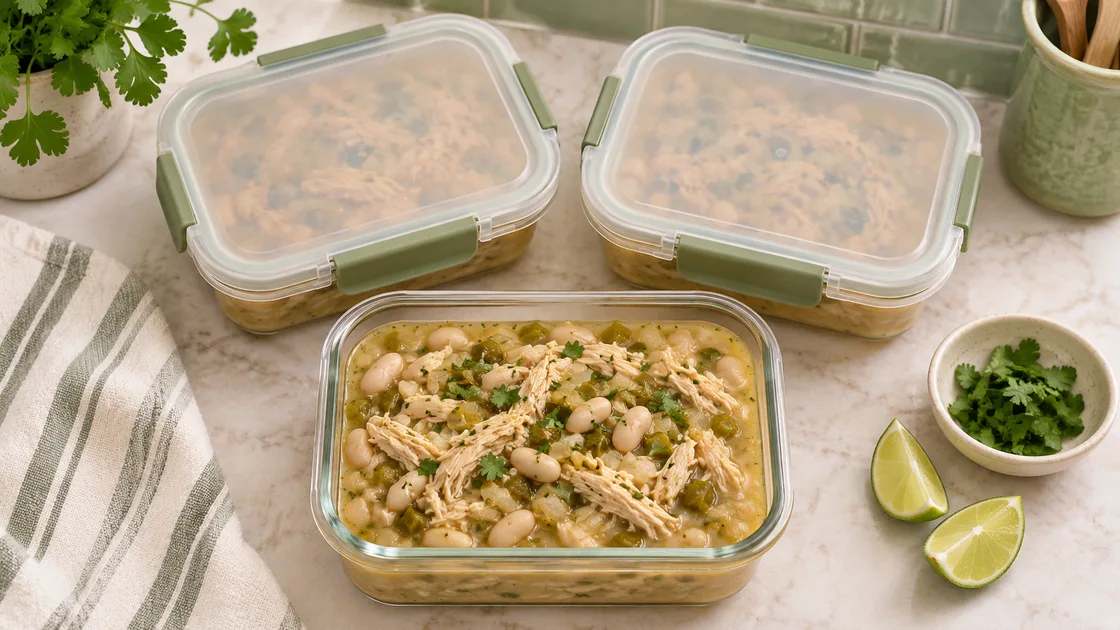
How to cool, store, and reheat soup
Divide cooked soup into shallow containers and refrigerate promptly at 40°F or below. The usual limit at room temperature is two hours, or one hour when the surrounding temperature is above 90°F. A large pot cools slowly, so portion it before refrigerating. Use refrigerated leftovers within three to four days, or freeze them for longer storage. These steps follow USDA guidance on handling leftovers.
Leave the headspace recommended by your freezer container’s manufacturer and label each portion with the name and date. Freeze meal-size portions so you can thaw the amount you need. Keep cream-based soup and chunky potato stew in mind when planning your freezer meals, because their texture may soften or separate after thawing. For another dinner you can portion ahead, see the make-ahead pasta bake collection.
Reheat leftovers on the stovetop or in the microwave until they reach 165°F throughout. Stir during heating and check several areas with a food thermometer. USDA advises reheating cold leftovers before placing them in a slow cooker for hot holding. If you need to keep a serving hot afterward, transfer the fully reheated food to a preheated cooker and maintain at least 140°F. Use the appliance directions for hot holding.
Keep the last two portions appealing
Before packing, stir from the bottom of the pot with a ladle. Beans, meat, and potatoes settle while a soup sits, so serving only from the top can leave the first containers watery. Set the containers side by side and divide the solids first. Add enough broth or gravy to each one to give the portions a similar balance. This also helps you see how many complete meals the batch actually gives you.
Keep a small topping plan alongside the storage plan. For white chili, pack lime separately from chips so the chips stay crisp. For Zuppa Toscana, fresh grated Parmesan can go in a small container to add after reheating. For beef stew, a little fresh parsley or a slice of bread gives the leftovers a different finish. Choose one or two additions you already have instead of buying several ingredients for a single lunch.
If the chilled soup becomes thick, start reheating with a small splash of water or broth. Stir until the cold gelled liquid loosens before adding another splash. Taste after the portion is fully hot, because the balance changes as it warms. Portion only the amount you expect to eat at that meal.
Choose tools around the portions you will eat
As an Amazon Associate I earn from qualifying purchases.
A wide opening makes a container easier to fill with a ladle, and a shallow shape helps with portioning and cooling. A secure lid matters for lunches, while a freezer rating matters for the portions you plan to save longer. Check microwave instructions for the base and lid separately. If you are buying a cooker, match its working capacity and controls to the recipe and the hours you are home.
- Compare shallow soup storage containers for individual lunches and freezer portions.
- Compare instant-read food thermometers for checking chicken and reheated servings.
- Compare programmable slow cookers after checking recipe capacity and the manufacturer’s instructions.
Frequently asked questions
Can I put frozen chicken in a slow cooker?
Thaw chicken before slow cooking. USDA’s slow cooker ingredient guidance calls for thawed ingredients and keeping perishable food refrigerated until preparation. Use a thermometer to check the chicken reaches 165°F before shredding. Plan thawing as part of the previous day’s preparation.
Can I cook a double batch?
Only if the recipe and your appliance capacity support it. Doubling ingredients can change how a cooker fills and how evenly food heats. Two separate cooking sessions or two suitable appliances can make portion planning easier. Keep each batch within the manufacturer’s fill guidance and check doneness before serving.
Which soup is easiest to pack for lunch?
White chicken chili is easy to divide because the shredded chicken, beans, and broth stir together. Portion the solids evenly before closing the containers and carry crisp toppings separately. For beef stew, put comparable pieces of meat and vegetables in each container before dividing the gravy.
What if I need a faster dinner tonight?
Choose a recipe designed for a shorter cooking method. For a change from soup, try the one-pan rice dinner collection. You can also reheat a properly stored soup portion from a previous batch on the stove or in the microwave, checking it reaches 165°F.