To freeze a pasta bake in individual portions, divide the baked casserole into shallow, single-serving containers, cover them tightly, label them, and freeze promptly. Thaw a portion in the refrigerator when you can, then reheat the center to 165°F (74°C). Baked ziti and lasagna are easy to divide into tidy portions. Mac and cheese takes a little more care because the sauce can thicken or separate after freezing.
Jump to the freezing steps · Thawing and reheating · Container guide
Already deciding what to cook? Start with these make-ahead pasta bake recipes, then use the instructions below to turn the extra servings into meals you can heat one at a time. A standard dinner serving is a better guide than the size of your container: pack the amount you would actually eat rather than filling every box to the rim.
Decide what to freeze before you start
For one-person lunches, cooked portions are the simplest choice. You can cut them to size, label them with a heating method, and pull out only what you need. If you are planning a dinner for several people and your recipe gives directions for freezing before baking, assembling a separate small casserole can be convenient. The rest of this guide focuses on portions of fully cooked pasta bake.
Set aside the servings you intend to freeze when you first serve dinner. That gives you a chance to share the sauce and topping evenly and pack the portions while they are still within a safe cooling window. If this is your first time freezing a particularly creamy casserole, freeze a single portion as a texture trial. Make a note about how it reheats before committing a full batch next time.
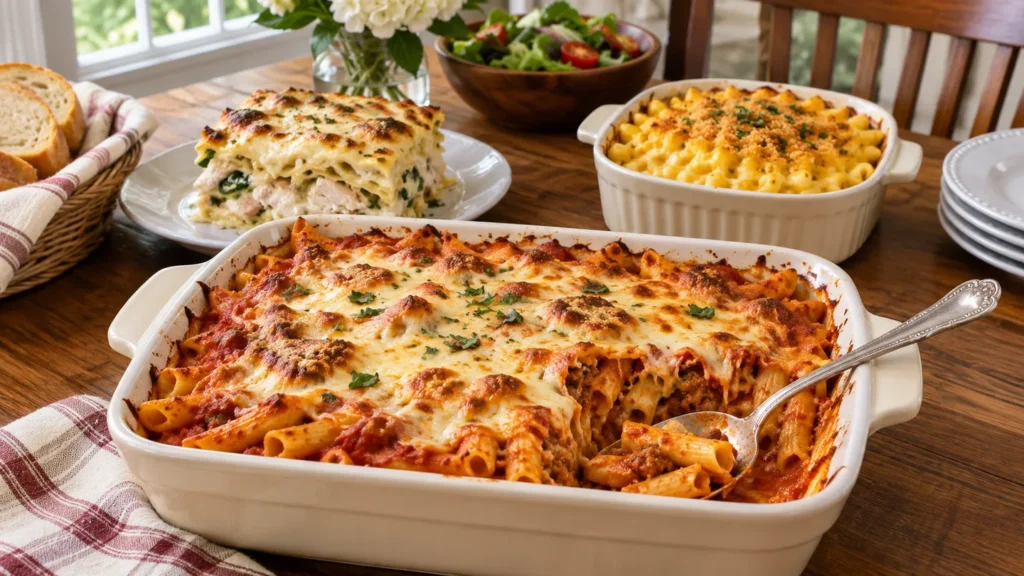
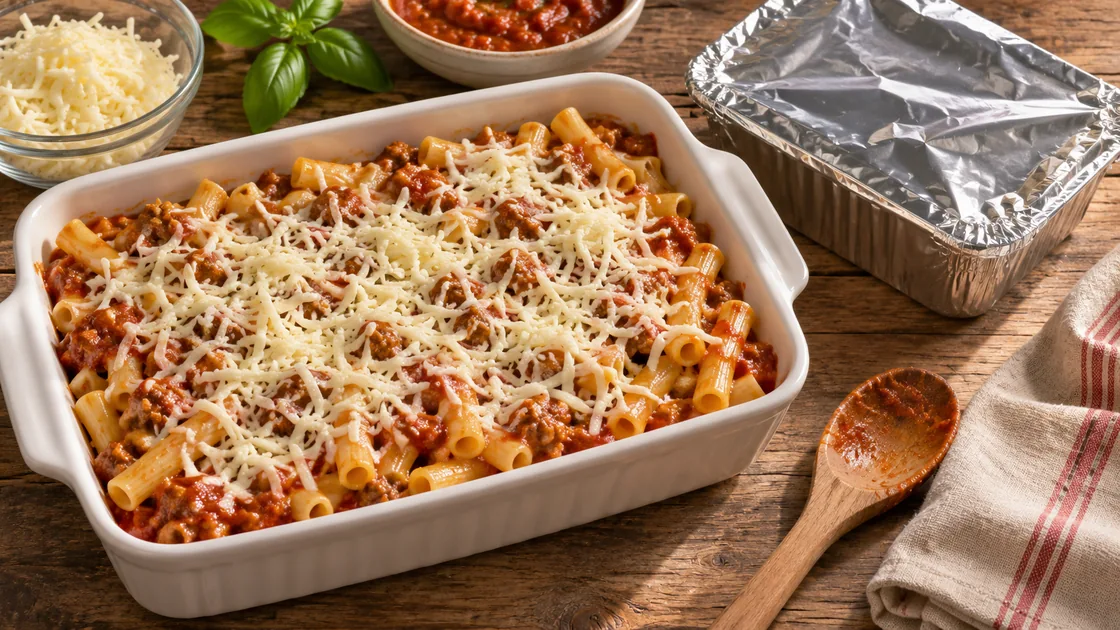
- Tomato-based ziti or baked spaghetti: Spoon a little sauce around any noodles exposed at the edges. For baked spaghetti and meatballs, divide the meatballs along with the pasta and make sure they heat through when reheated.
- Layered lasagna: Cut a slice that is narrow enough to lift in one piece and shallow enough to heat evenly. White chicken lasagna has a creamy sauce, so expect a possible texture change after thawing.
- Baked mac and cheese: Pack shallow scoops and plan to refresh the sauce as it warms. If the recipe allows you to add crunchy crumbs after reheating, store them separately. See PrepDaisy’s creamy baked macaroni and cheese for a casserole to portion.
How to freeze a pasta bake in five steps
1. Prepare the containers before dinner
Set out shallow freezer-safe containers and matching lids before you start serving. Choose a footprint that fits your intended portion without requiring you to press it into a deep mound. If you plan to reheat directly in the base, check that the manufacturer approves both the intended heating method and the conditions under which you will use it. Keep containers without that approval for storage and transfer the food to a suitable dish for reheating.
2. Portion the casserole promptly
Use a broad spatula to lift squares of lasagna or a serving spoon to divide ziti. Spread the portions in shallow containers so they can chill quickly. The USDA guidance on handling leftovers advises prompt refrigeration at 40°F (4°C) or below or freezing at 0°F (−18°C). The total time at room temperature should stay within two hours, or one hour when the temperature is above 90°F (32°C). You can put food in shallow containers and chill it promptly while it is still warm. Taking up an entire shelf with a deep, full casserole dish makes it harder for the middle to cool.
3. Pack tightly and protect exposed edges
Spoon reserved sauce over dry corners of tomato-based portions if you have some on hand. Seal each container securely. If you choose freezer bags instead, put properly chilled portions in bags intended for freezing, gently press out extra air without squeezing sauce into the seal, and zip them closed. A shallow rigid container usually preserves the layers of lasagna better. Use a bag for scooped pasta when you value a flat package and do not mind a less tidy shape.
4. Label for the person who will reheat it
Write the recipe name, freeze date, and serving count. If your household needs it, include allergy information or a note about ingredients such as meat, dairy, or wheat. A label such as “Baked ziti · Nov 15 · 1 serving · thaw in fridge” takes seconds to write and answers the most useful questions when all the containers look alike. Put labels where you can read them without lifting the whole stack. If you include reheating instructions, write the 165°F endpoint and leave specific timing to the person using the appliance.
5. Freeze in one layer and rotate the oldest forward
Place the containers flat in the freezer with some room around them when possible, then stack them once they are firm. Store new portions behind older ones. Aim to eat your oldest pasta bake first, while the sauce and noodles still have a texture you enjoy. Ice crystals or dry-looking corners often point to air exposure or temperature changes. Review the seal and choose containers closer to the size of the portion for the next batch.
How to thaw and reheat frozen pasta bake
Move the portion to the refrigerator the night before you expect to use it. Place the container on a plate or tray to catch condensation. A thick slice may still have an icy center the next day. If so, allow more refrigerator time or reheat using a method and vessel approved for the condition the food is in. Avoid reheating a frozen glass container in a hot oven unless the manufacturer specifically permits that temperature transition.
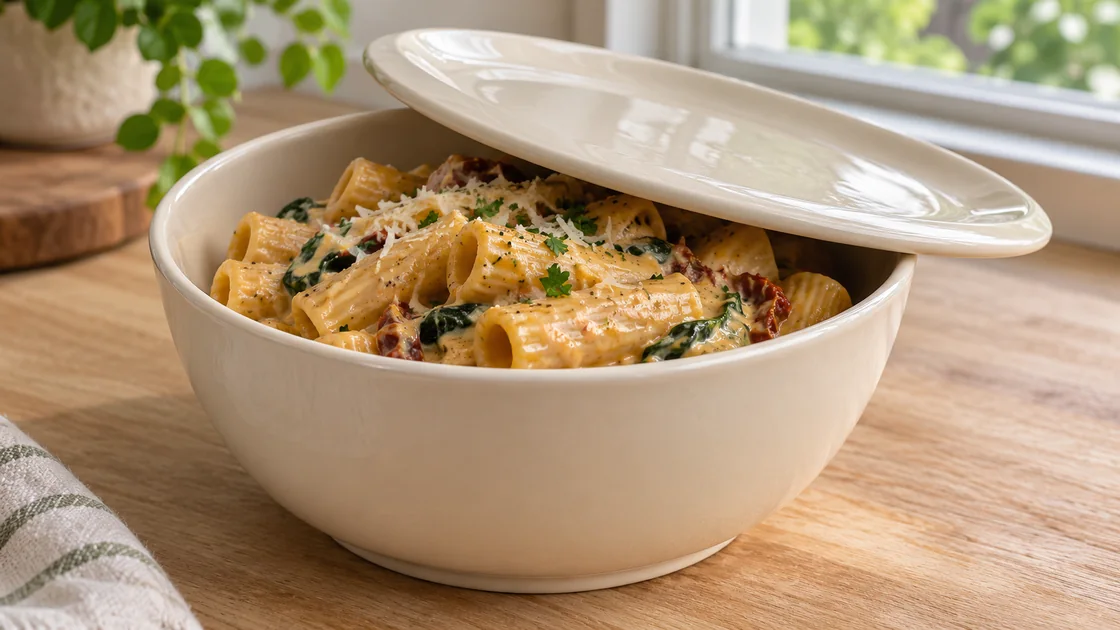
- Oven: Transfer to a suitable oven-safe dish if needed. Cover loosely with foil to retain moisture while the center warms. Once the portion has heated through, uncover briefly if you want to refresh a cheese top. Keep any foil away from heating elements.
- Microwave: Use a microwave-safe dish and a vented microwave-safe cover. Heat in stages, rotating the dish and stirring scooped pasta when practical. For a layered slice, check the center and a second spot after letting the heat settle briefly. Add heating time in short increments if needed.
- Check the center: Reheat leftovers to 165°F (74°C) and check with a food thermometer. For lasagna or baked spaghetti with meatballs, check the thickest part and any dense center piece. Bubbling sauce at the edge can appear while the middle is still cool.
For a tomato-based bake that looks dry, try a spoonful of matching sauce before heating. For mac and cheese, start with a small splash of milk and stir when the pasta loosens. Sauce can pool if you add too much at once. PrepDaisy’s guide to reheating creamy pasta without drying it out goes deeper on adjusting the texture of dairy sauces. For safe temperatures and microwave handling, see the FoodSafety.gov guidance.
Fix the most common freezer and reheating problems
- Dry edges: Pack noodles with enough sauce to cover the exposed corners and keep the lid tight. For reheating, add a spoonful of sauce or a little water if appropriate and cover while the portion heats.
- Cold center and soft edges: Pack a flatter portion next time. In the microwave, lower the power if your appliance lets you and rotate the container. Check several spots before serving.
- Grainy or oily cheese sauce: Warm gently, add a little milk if the sauce is thick, and stir once it loosens. A dairy sauce can still look different after thawing. For a batch with a very delicate sauce, cook enough for dinner and freeze a tomato-based casserole for lunches.
- Soggy crumb topping: Keep extra crumbs separate and add them after heating, or finish a fully heated portion briefly uncovered in a suitable oven-safe dish. Watch closely because a small portion dries quickly.
- Portions stuck together: Pack one serving per container, or use separate freezer-safe wraps inside a larger freezer bag. Label the outer bag so you can remove one portion and reseal the rest.
Containers and tools for freezing one serving
As an Amazon Associate I earn from qualifying purchases. Start with freezer-safe containers you already own. If you need replacements, match the container to the shape of the meal and the appliance you will use. A shallow rectangular base is practical for a slice of Million Dollar Baked Ziti or lasagna. For scooped portions, look for a lid that closes fully when the rim is clean and a base that stacks securely in your freezer.
- Freezer-safe glass containers: Helpful if you want rigid sides for layered portions. Read the base and lid instructions separately, including restrictions on moving between freezer, oven, and microwave. Compare glass meal-prep containers on Amazon.
- Freezer-safe plastic containers: Handy for carrying a lunch or stacking several portions. Check any microwave instructions for the base and lid before using them to reheat. Compare shallow freezer containers on Amazon.
- Instant-read food thermometer: Useful for checking the middle of dense portions, where food often heats last. Look for a probe you can insert sideways into a thin slice without touching the container. Compare instant-read thermometers on Amazon.
Frequently asked questions
Can I freeze pasta bake after it has been refrigerated?
Yes, if you cooled and refrigerated it promptly and it is still within USDA’s three- to four-day window for cooked leftovers. Freezing it soon after cooking is more convenient for rotation and usually gives the noodles and sauce less time to change texture in the refrigerator. If you are unsure how long the dish sat out or how it was stored, discard it.
Can I reheat it straight from frozen?
Yes, you can reheat fully cooked leftovers from frozen in a suitable vessel. A dense casserole slice takes longer to heat through than a thawed one. Use a shallow portion, cover it as appropriate for your appliance, and check the center reaches 165°F. If you have time to thaw it in the refrigerator, the center and edges usually heat more evenly.
Can I freeze pasta bake with a crunchy topping?
Yes. Expect crumbs baked on top to soften as the portion freezes and thaws. If crunch matters, save some topping separately and add it after the portion is heated, or give the hot portion a short uncovered finish in the oven. A loose sprinkle of toasted crumbs works particularly well on scoops of macaroni and cheese.
How do I know how many portions to pack?
Before dinner, estimate how many servings you will eat fresh, then pack the extra in portions sized for future meals. If the dish is going into lunch boxes, pack one serving per container so there is no need to thaw a batch for one person. For a shared dinner, two moderate containers can give you more flexibility than a single deep one, especially when people eat at different times.